

The Logic of Robust Portfolios: Navigating Market Cycles Like a Pro
The financial markets of recent years have presented investors in Switzerland with entirely new challenges. Rapid interest rate reversals, geopolitical shifts, and the ongoing need to protect purchasing power in Swiss francs make one thing clear: simply selecting individual stocks is no longer enough. For high-net-worth individuals, family offices, and entrepreneurs, the focus today is no longer on maximum short-term returns, but on the resilience of their total wealth.
But how does the institutional approach of a professional asset manager differ from the investment strategy of a private investor? The answer lies in the systematic management of risk and the utilization of structural advantages.
Key takeaways:
- Focus on risk management: In the institutional approach, returns are never managed in isolation, but always on a risk-adjusted basis as a measure of efficiency (Sharpe ratio).
- Structural core: Long-term strategic asset allocation (SAA) secures the foundation, while tactical asset allocation (TAA) exploits inefficiencies to generate active alpha.
- Franc dynamics: Protecting real purchasing power in Swiss francs requires precise currency hedging and a selective focus on the strong Swiss SME sector.
- Cost efficiency: True resilience protects net returns from performance drag through the uncompromising use of rebate-free clean shares.
Risk management as the foundation of outperformance
A common misconception is that higher returns must necessarily come with taking on uncontrolled risks. In professional asset management , we never view returns in isolation, but always in relation to the risk taken – expressed mathematically by the Sharpe ratio risk metric:
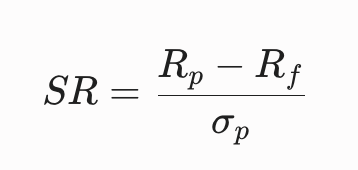
Where Rp the portfolio return, Rf the risk-free rate and σp the portfolio volatility. A top-tier asset manager does not primarily optimize Rp, but rather maximizes this metric to achieve the highest efficiency per unit of risk.
While private investors often act emotionally during rising market phases and build up concentration risks, the institutional approach is based on disciplined, counter-cyclical reallocation.
- Scenario Analysis & Stress Tests: Portfolios are continuously subjected to mathematical simulations. How does the portfolio behave in the event of a sudden inflation shock, an extreme appreciation of the Swiss franc, or a liquidity crunch in the credit markets?
- Asymmetric Correlations: By strategically using asset classes that exhibit negative correlation during times of crisis, the volatility of the overall portfolio is minimized without diminishing long-term return potential.
The primary goal is protection against significant losses (drawdown protection). After all, the mathematical fact remains: a loss of 30% requires a subsequent gain of nearly 43% just to return to the starting point. Resilience begins with avoiding major mistakes.
Strategic vs. Tactical Asset Allocation
A robust portfolio rests on two pillars that must be strictly separated yet dynamically integrated. Managing these two levels determines long-term wealth preservation.
Strategic Asset Allocation (SAA)
This is the immutable, long-term foundation of the wealth. Based on the client's individual risk profile, liquidity planning, and time horizon, the fundamental strategic allocation (e.g., equities, bonds, precious metals, real assets) is defined. Empirically proven to account for over 80% of long-term investment success, the SAA acts as the tectonic anchor of the portfolio.
Tactical Asset Allocation (TAA)
This is where the expertise of active management proves its worth. Within predefined, narrow ranges, the asset manager exploits short- to medium-term market inefficiencies. For example, if Swiss quality stocks fall below their intrinsic value (fair value) due to macroeconomic overreactions or global liquidity outflows, TAA allows for a controlled overweighting. This contrarian approach generates the decisive alpha while the market is in a state of panic.
Risk management compared: Private vs. Institutional
To make the methodological differences tangible, the practical approaches can be compared as follows:
Focus
- Private approach (DIY / Retail): Maximum gross return in bull markets.
- Institutional approach (Format Vermögen): Optimization of the Sharpe ratio and thus risk-return efficiency.
Diversification
- Private approach (DIY / Retail): Often only superficial diversification, for example through the overweighting of well-known SMI stocks such as Nestlé or Novartis.
- Institutional approach (Format Vermögen): Deep, sectoral, and factor-based diversification, including small and mid caps as well as global diversification without currency concentration.
Cost structure
- Private approach (DIY / Retail): High burden due to retail fund classes, total expense ratios, front-end loads, and hidden kickbacks.
- Institutional approach (Format Vermögen): Use of clean shares and institutional tranches without retrocessions.
Market crash reactions
- Private approach (DIY / Retail): Emotional reactions, such as panic selling at the bottom or "sitting out" fundamentally damaged stocks.
- Institutional approach (Asset management): Systematic rebalancing and counter-cyclical purchasing of undervalued value stocks.
The Swiss context: Purchasing power and currency stability
For investors based in Switzerland or reporting in Swiss francs (CHF), the rules of the game are entirely unique. Historically and structurally, the CHF acts as the ultimate "safe haven." While this provides reassurance during geopolitical crises, it creates a complex dynamic for portfolio management: the constant tendency of the franc to appreciate.
For a globally diversified portfolio, this means that foreign earnings and capital gains (e.g., in USD or EUR) are often eroded by currency effects when consolidated into CHF. Professional portfolio management addresses this phenomenon with two core strategies:
- Selective currency hedging: Through the precise use of hedging instruments, currency risks are neutralized during volatile phases without blocking the opportunities offered by the underlying asset.
- Focus on the Swiss mid-market (SPI Extra): Instead of holding only the global, often sluggish blue chips of the SMI, the focus is on research-driven, export-oriented Swiss small and mid-caps. These companies are deeply rooted in the stable Swiss ecosystem, yet they leverage global growth markets and have historically offered superior substance and dividend strength.
Conclusion: Why true resilience requires a bespoke mandate
Standardized fund solutions, rigid banking products, or purely algorithmic robo-advisors reach their limits when it comes to complex wealth architectures starting at CHF 500,000. True portfolio resilience cannot be forced into a pre-fabricated mold. It requires deep, independent buy-side research, the strict avoidance of expensive in-house products (to prevent conflicts of interest), and continuous monitoring by experienced experts.
Awards from independent trade media, such as the business magazine BILANZ in its long-term 60-month rating, consistently confirm that continuity, mathematical discipline, and an independent investment philosophy are the only reliable cornerstones for lasting wealth protection.
Stress test for your wealth: Are you ready for the next market cycle?
Crisis-resistant wealth structuring from CHF 500,000 cannot be managed with standardized, one-size-fits-all solutions. It demands a deep understanding of complex correlations, macroeconomic cycles, and uncompromising risk management that proactively safeguards the long-term purchasing power of your capital in Swiss francs.
As an independent partner, Format Vermögen & Anlagen AG supports you from our offices in Zurich, St. Gallen, Basel and Lucern in consistently weatherproofing your portfolio. Our latest 2026 awards demonstrate that our risk-adjusted investment strategy consistently ranks at the top in long-term comparisons. With institutional precision, we analyze your existing asset structure, eliminate dangerous concentration risks, and optimize the efficiency of your investment costs—completely transparently and without any in-house product bias.
Bring true resilience to your investments.
→ Schedule your free, no-obligation initial consultation now for a sound portfolio analysis and strategic realignment.

.png)

Format Vermögen & Anlagen AG holds a FINMA license as a wealth & asset manager for collective investment schemes.


